
Jake Webb
blackheritagetrailnh.org
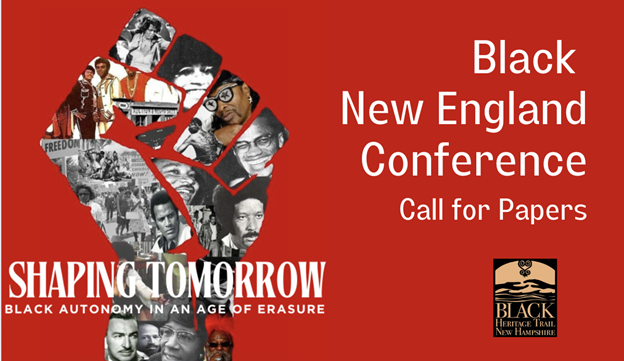
(Black PR Wire) As we approach the 20th iteration of the Black New England Conference (BNEC), the organizers are inviting students, educators, scholars, community members, and creative voices to contribute to an important conversation: shaping tomorrow with Black autonomy, agency, and resilience. The 2026 Call for Papers opens a timely opportunity to engage with critical questions about identity, power, history, and community — and to bring your research, reflections, and creative work into conversation with others across New England and beyond.
Why This Year Matters
For black America, the pursuit of autonomy is especially urgent amid ongoing efforts of erasure. This erasure takes many forms, from the distortion or omissions of black history in classrooms to misrepresentations in the media, to the silencing or marginalization of Black voices in our nation’s most influential spaces.
Furthermore, 2026 is the 250th anniversary of the Declaration of Independence. Against that backdrop, autonomy is not only necessary, but a statement. It encompasses the struggle for self-determination, control over narratives, economic independence, political representation, and the preservation of cultural heritage. The 20th Annual Black New England Conference will bring together scholars, activists, artists, and community leaders to examine how Black communities have fought for autonomy, historically and today.
- A milestone moment. The 2026 conference marks the 20th Annual BNEC — a significant milestone that invites not just reflection on where we’ve been, but bold reimaginings of where we can go.
- Centering Black autonomy in an era of erasure. The theme: “Shaping Tomorrow: Black Autonomy in an Age of Erasure.” In a moment when Black history and Black voices continue to be misrepresented, marginalized, or overlooked, this conference seeks to reaffirm the power of Black communities to define, preserve, and shape their own narratives.
- Bridging past, present, and future. Whether your work is historical, contemporary, or forward‑looking, BNEC welcomes perspectives that explore economic empowerment, cultural affirmation, community building, political engagement, self-defense, and institutional sustainability — fields deeply relevant to both academic study and community activism.
BNEC offers generous flexibility in the kinds of contributions you can make. This is not solely a conference for academic historians or traditional research. Submissions may take various formats:
- Individual papers
- Full panel proposals
- Creative or community‑based presentations
- Case studies or community narratives.
- An abstract of 200–250 words, paired with a short bio of approximately 100 words.
- Indicate the format of your proposal (individual, panel, creative, etc.).
- Proposals should speak to one or more of the themes: Self‑Definition & Cultural Preservation; Economic Empowerment; Building Community & Black Institutions; Resistance & Self‑Defense; Political Engagement & Representation.
- Undergraduate and graduate students exploring topics of race, history, culture, politics, community development, media, or sociology.
- Educators and researchers — faculty or independent scholars with an interest in New England’s Black experience, Black history, or Black futures.
- Artists, activists, community members, and organizers — BNEC welcomes creative, community‑based, and cross-disciplinary work, not just traditional academic approaches.
- Anyone passionate about Narrative Justice — if you care about uplifting Black voices, challenging silence or erasure, and shaping inclusive futures, your contribution to the conversation is meaningful.
- You gain a public platform to share your work with peers, scholars, community members, and allies across the region.
- You contribute to a growing archive of Black thought, history, activism, and creativity in New England — helping to preserve stories often overlooked or erased.
- You join a community committed to dialogue, learning, and transformation; your work can spark discussion, inspire action, and foster solidarity.